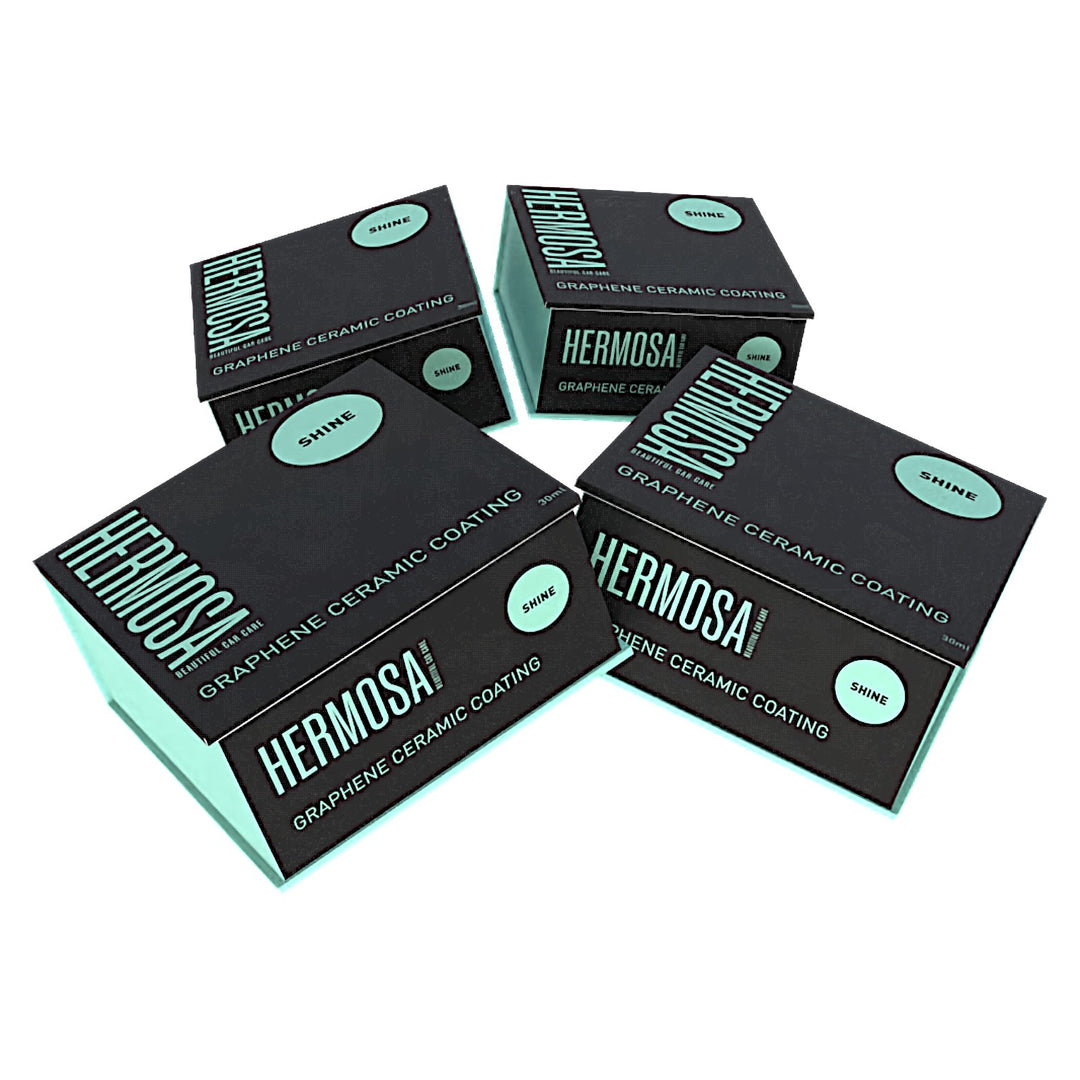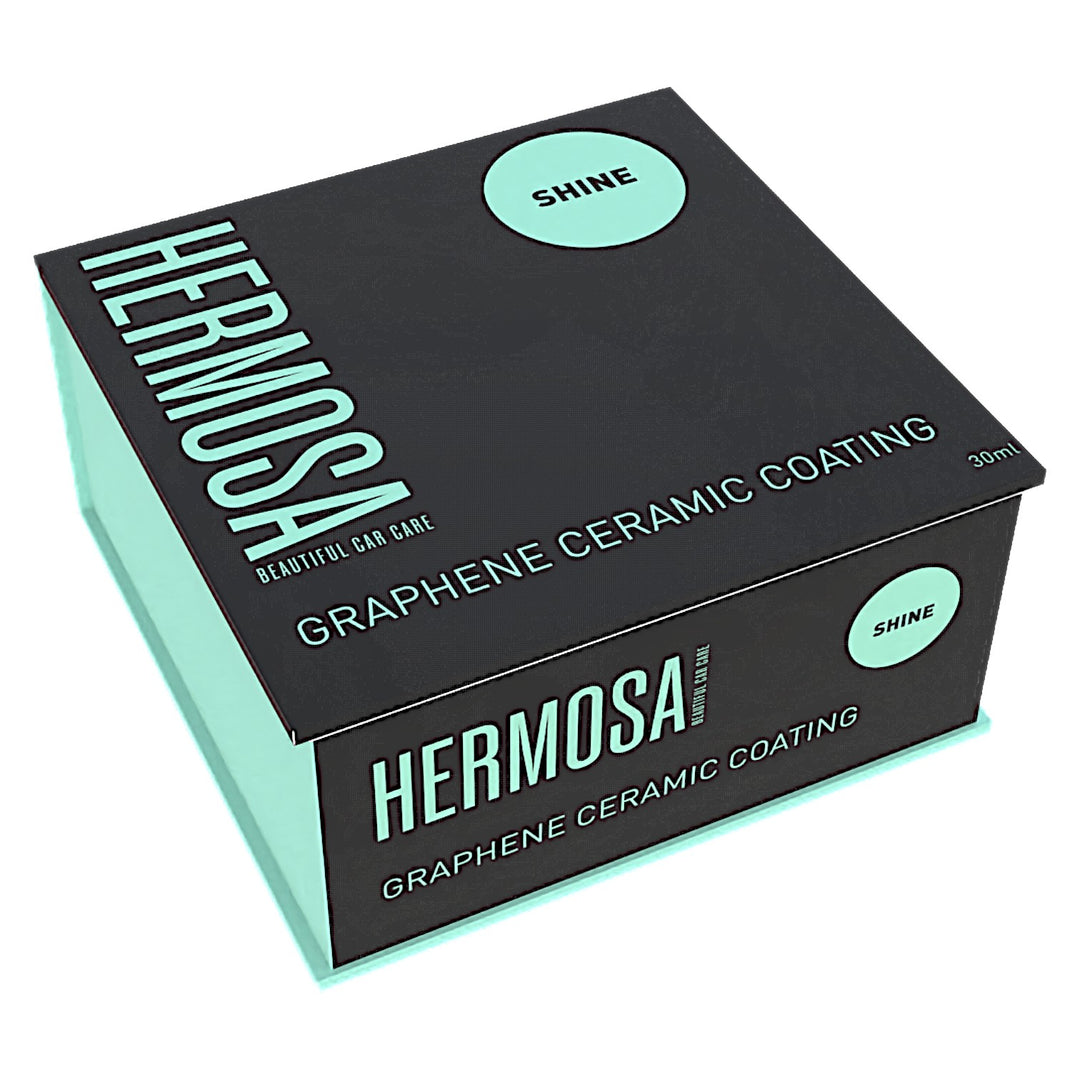

Ceramic Coating Maintenance: Layer and Reinforce or Acid Reset?
If you’ve been researching ceramic coating maintenance, you’ve likely come across two very different approaches.
Some manufacturers and detailing professionals recommend periodic acidic washes to “reset” a coating.
Others advocate gentle maintenance and layering additional SiO₂ protection over time.
So which method actually protects your investment long term?
The answer depends on whether your goal is correction — or preservation.
At Hermosa, we believe in preservation.

Approach One: Preserve and Reinforce (The Hermosa Method)
A ceramic coating rarely fails suddenly. More often, performance gradually declines due to:
-
Hard water mineral deposits
-
Road grime and traffic film
-
Environmental contamination
-
UV exposure
-
Improper washing techniques
In many cases, the coating underneath is still structurally bonded. It’s simply masked by contamination.
Rather than aggressively stripping the surface, our philosophy focuses on:
-
pH neutral ceramic shampoo
-
SiO₂-infused maintenance products like the Hermosa Ceramic Spray and Quick Detailer
-
Thus reinforcing the coating with sacrificial protection
Using a quality ceramic shampoo prevents contamination from bonding while gently cleaning the surface without chemically stressing the coating.
Layering additional SiO₂ does not “fake” performance. It adds a sacrificial silica layer that absorbs UV exposure, environmental fallout and light abrasion before the base coating does.
If the original coating is still bonded — even if beading has reduced — reinforcement absolutely extends its lifespan.
This is the foundation of long-term ceramic coating care.
It’s not about starting again. It’s about building on what’s already there.

Precision Water Spot Removal (Not Full-Car Acid Washing)
Water spotting is one of the most common challenges for ceramic-coated vehicles, particularly in areas with mineral-heavy water. Water spots are not simply surface marks — they are concentrated mineral deposits, typically calcium and magnesium salts, left behind as water evaporates. As the water dries, dissolved minerals crystallise and remain bonded to the surface.
If not removed promptly, these mineral deposits can begin to chemically interact with the coating. Ceramic coatings are highly resistant, but they are not completely immune to prolonged mineral exposure. Over time, mineral accumulation can lead to surface bonding and, in more severe cases, etching into the upper silica (SiO₂) layer of the coating.
Heat significantly accelerates this process. When water droplets sit on a hot panel — particularly in direct sunlight — evaporation occurs rapidly, increasing mineral concentration within the droplet. This creates a highly alkaline micro-environment at the surface. Elevated pH levels, combined with heat, increase the likelihood of chemical interaction between the minerals and the coating, accelerating the risk of etching.
The longer deposits remain, and the more frequently the surface is exposed to heat cycles, the greater the potential for surface degradation.
This is why prompt removal and controlled, targeted treatment are essential in preventing long-term coating damage.
Instead of washing the entire vehicle with an acidic shampoo, we favour a more controlled solution.
A dedicated water spot remover — which is acidic — can be applied only where mineral deposits exist.
This approach:
-
Dissolves mineral deposits precisely where needed
-
Minimises unnecessary chemical exposure
-
Reduces the risk of prematurely weakening the coating
Acid has a place in detailing. But precision matters.
By treating affected panels locally rather than exposing the entire vehicle to acidic chemistry, you correct the issue while maintaining the integrity of the coating across the rest of the car.
It’s a smarter, lower-risk method.
Approach Two: The Acid “Reset” Method
Some manufacturers and detailing professionals advocate periodic acidic washes to strip contamination and expose the coating beneath.
These acidic shampoos are designed to:
-
Dissolve heavy mineral build-up
-
Remove alkaline residues
-
Strip waxes and sealants
-
Break down stubborn contamination
The theory is straightforward:
If contamination is clogging the coating and reducing hydrophobic performance, remove it aggressively and restore what’s underneath.
Used occasionally and correctly, an acidic wash can restore water behaviour that was masked by mineral deposits.
However, there’s an important consideration.
While a single acidic wash will not destroy a ceramic coating, repeated exposure to strong acidic chemistry gradually weakens the upper silica network.
Over time, this accelerates natural degradation.
This method is often suited to professional environments where coatings may be polished, corrected, or reapplied more frequently.
For long-term ownership, however, routine chemical resetting introduces unnecessary stress.
Why the Debate Exists
The disagreement largely comes down to optimisation.
Detailers may prioritise exposing the pure coating layer beneath contamination.
Owners typically prioritise:
-
Longevity
-
Consistent beading
-
Ease of maintenance
-
Reduced risk
These are different goals.
Resetting focuses on correction. Layering focuses on durability.
Both approaches can be technically valid — but they serve different strategies.

The Intelligent Long-Term Ceramic Care Strategy
For most vehicle owners, the most effective plan looks like this:
-
Wash regularly with a pH neutral ceramic shampoo.
Prevent contamination from bonding in the first place. -
Reinforce with SiO₂ maintenance products.
Add sacrificial protection and enhance gloss and hydrophobic performance. -
Use a targeted water spot remover for mineral deposits.
Correct localised issues without stressing the entire coating. -
Reserve full acidic washes for severe neglect or pre-polishing preparation.
Not routine maintenance.
The Bottom Line
Ceramic coatings are an investment.
If your goal is maximum lifespan, consistent showroom gloss and strong hydrophobic performance, preservation and reinforcement will almost always outperform habitual chemical stripping.
Acid is a corrective tool — not a maintenance routine.
At Hermosa, we focus on strengthening protection rather than gradually eroding it.
Because legendary shine isn’t achieved by starting over.
It’s built through intelligent layering, precision correction, and consistent care.